 CueBuddy
 Scan with your phone to download
The teleprompter has been around for over seventy years, and its core principle hasn't changed: a piece of semi-transparent glass at a 45-degree angle, reflecting text from a screen below to the speaker. What has changed is who uses it, how they use it, and where.
From presidential podiums to ordinary smartphone screens, the teleprompter evolved through four phases.
Phase One: The TV Studio's Exclusive Tool (1948–2005)
In 1948, a soap opera actor at CBS couldn't memorize all his lines. He approached a company engineer, who rigged up a makeshift solution: the script written on a paper scroll, turned by a motor. The actor read as it rolled.
That was the world's first teleprompter prototype — the "TelePrompTer," a brand name that eventually became the generic term for the entire category.
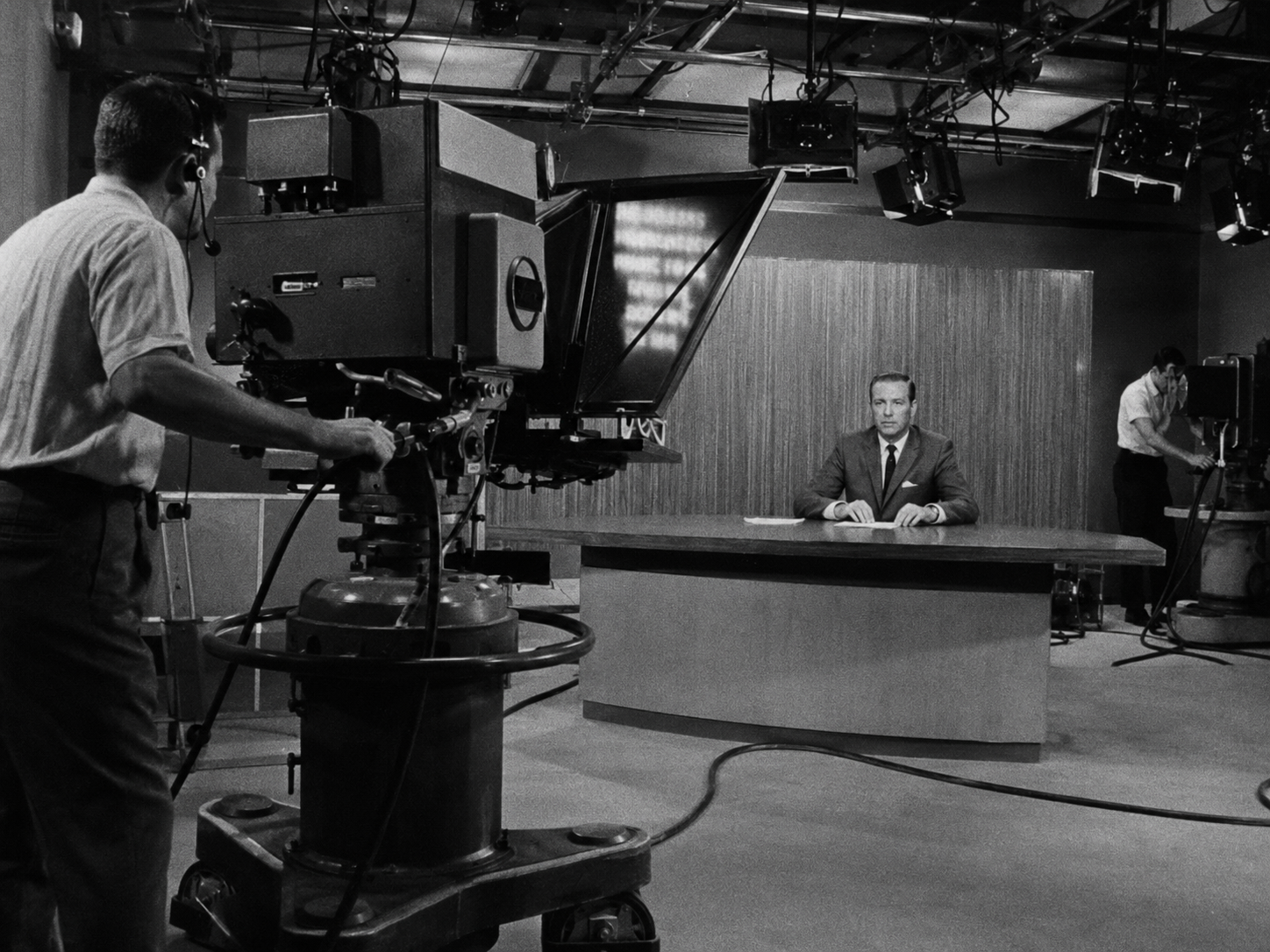
By the 1950s, the technology evolved into the "through-the-lens" prompter: a half-silvered mirror inserted between camera and lens, with the script reflected from below. This is the classic 45-degree glass design still used today.
By the 1980s, computers replaced paper scrolls with electronic displays, paired with foot pedals for speed control. By the 2000s, LCD screens made prompters smaller and cheaper.
But regardless of hardware evolution, the teleprompter had exactly one user base for decades: the broadcast industry. Regular people never encountered one, let alone used one.
Phase Two: The YouTube Era's Underground Tool (2005–2015)
YouTube launched in 2005, and personal video content exploded. But early creators had no industrial production pipeline — phone cameras were terrible, editing software was painful, and teleprompters were something you'd "heard of but had no idea where to buy."
Amateur workarounds proliferated: an iPad propped below the camera, a laptop behind the lens, scripts taped across an entire wall.
Then smartphones became ubiquitous. Camera quality caught up. Editing apps became intuitive. Phone screens got big enough. Teleprompter apps started appearing.
Early apps were crude: text scrolling bottom to top, speed adjustable by hand. Too fast, and you'd scramble to slow it mid-take. Too slow, and you'd awkwardly wait. But even that was a revelation — at least you didn't have to tape scripts to the wall.
Phase Three: Short Video Forces Evolution (2018–Present)
Around 2018, Douyin and TikTok upended the content landscape.
Short-form video has two defining traits: relentless publishing cadence (daily or even multiple times a day) and dominance of talking-head content (tutorials, opinions, reviews, storytelling, news commentary — all requiring scripts).
Fixed-speed scrolling teleprompters suddenly weren't enough. A two-minute video has constantly shifting pacing: fast open, steady middle, slow close. Manual speed adjustments mid-recording were a nightmare.
Voice tracking entered the picture: the device listens to where you are and scrolls automatically. You speed up, it speeds up. You pause, it stops. The teleprompter went from "nice to have" to "production necessity." For daily posters, a teleprompter without voice tracking could cost two to three extra hours per day.
Phase Four: The Teleprompter Comes Down from the Mountain
Open the App Store and search "teleprompter" — you'll see a wall of options with comparable core features. This means one thing: the teleprompter is no longer exclusive to TV studios or top-tier creators. It's a tool anyone can open on their phone when they want to make a decent video.
This vanishing barrier brought an interesting side effect: the average quality of content went up.
Before, someone with great ideas but poor speaking skills struggled to get their content to spread. Now, they can pour their energy into writing a solid script, then use a teleprompter to deliver it. Good content is no longer bottlenecked by delivery anxiety.
Newer apps like CueBuddy reduce setup: open the phone, use a floating prompting window where the operating system permits it, or switch to full-screen prompting. Voice following uses Apple's Speech framework; recognition availability, network use, and privacy behavior depend on the current system, language, permissions, and published privacy policy.
What the Teleprompter Actually Changed
The biggest thing the teleprompter did for the content industry wasn't "making videos faster."
It made more people willing to start.
Too many people have great content, sharp ideas, and valuable experience — but never hit record because they're afraid of talking to a camera or go blank as soon as the light goes on. For these people, the teleprompter isn't about efficiency. It's about breaking through that psychological barrier.
From a bulky glass-and-motor rig to a lightweight app, the teleprompter has traveled over seventy years. The form changed. The function evolved. The price collapsed. But one thing stayed constant: helping you say what you came to say, exactly how you meant to say it.
Try the free online teleprompter first
If you are solving script, pacing, line-memory, or filming workflow issues, open the browser teleprompter first and test the script there. Use the CueBuddy app when you need a stronger mobile recording workflow.
Start your next recording with CueBuddy
Try the free teleprompter workflow first, then open CueBuddy if you need stronger recording and camera workflows.